
Hi there, my friend.
When people think about preparing for retirement, they tend to focus on investments and savings. They’re aiming for magic-number dollar amounts and tinkering with their holdings to get themselves in the best position to reach their goals.
However, after talking with a retirement expert who’s spent years studying how Gen X approaches this phase of life, it’s clear that the risks go well beyond asset allocation or market returns.
What you don’t know, and the questions you don’t ask early enough, matter enormously, too.
Most people are guessing more than they realize
Ask someone how much they’ll need in retirement, and you’ll often get a confident answer.
Ask them how much they’re actually spending right now, and things get a lot less clear.
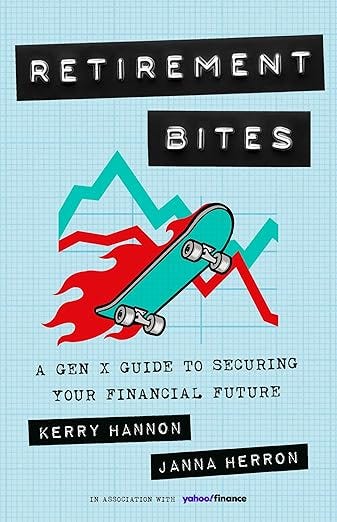
Janna Herron, co-author of “Retirement Bites: A Gen X Guide To Securing Your Financial Future,” said, “I think it’s really hard for people to figure out how much they’re going to spend in retirement. I think there are a lot of people who actually have no idea how much money is going out the door.”
That’s a big problem.
A lot of retirement planning is built on rules of thumb. One of the most common is that you’ll need around 80% of your current spending in retirement. However, that only works if you know what your current spending actually is.
“If the rule of thumb is you’re going to spend about 80% of what you spend now,” Herron said, “you need to know what that 100% is.”
For many people – especially those in their 40s and 50s, often at peak earning years – that number is surprisingly fuzzy. Without a clear baseline, everything built on top of it becomes an estimate stacked on another estimate.
The biggest retirement expense isn’t what most people plan for
When people underestimate retirement costs, healthcare is often where the gap shows up, Herron said.
That’s not just because it’s expensive, but because it’s unpredictable, and because the most important decisions affecting those costs happen years before retirement actually begins.
“In your 40s and your 50s is the last time that you can make a change to your health where it will make a difference in your 60s, 70s and 80s,” Herron said.
That’s a narrow window with long-term consequences.
That viewpoint reframes midlife decisions in a way most financial advice doesn’t. The habits you build, the conditions you manage, and the level of engagement you have with your own care can directly influence what you’ll spend later.
In other words, your mental and physical health today plays a massive role in your financial health tomorrow.
The problem is that this is an area where people often get very passive. That’s a missed opportunity, Herron said.
“If you can be a little bit more involved in your own health, it can really make a big difference in retirement,” Herron says
It can be as simple as asking some basic questions of your doctor. For example, making sure you understand why you’re taking a specific medication. It is OK, Herron said, to ask about generics or other less expensive options.

Never be afraid to ask questions regarding your health
If the upside is so clear, why don’t more people do this?
They don’t, in part, because these situations feel high-stakes and unfamiliar. Talking to a doctor or specialist doesn’t feel the same as calling a cable company to dispute a bill. We often just don’t think we know enough to ask the right questions, and that can make us not want to do it.
Herron suggested a useful way to rethink that dynamic.
“You’re probably an expert in something,” Herron said. “If someone asks you questions, do you ever think, ‘Oh, this person’s so stupid?’ No. No question’s too dumb. That’s the exact same thing when you’re talking to your mechanic or your doctor. That’s what they’re there for.”
If they do push back, consider that a giant, waving red flag
“If they do think you’re dumb or make you feel like you’re dumb,” she said, “then you should take your business elsewhere.”
That principle applies broadly, but it’s especially important in areas that directly affect your long-term financial security.
More simple questions to impact your healthcare costs
This isn’t about becoming a medical expert overnight. It’s about getting a little more intentional with the questions you ask in moments that most people just move through on autopilot.
Those moments add up. They can mean the difference between manageable healthcare costs in retirement and something far more overwhelming.
So if you’re looking for a practical way to start, here are a few additional questions worth having in your back pocket the next time you’re dealing with a doctor, a specialist, a pharmacist or your insurance company:
“Is this test or procedure actually necessary right now, or can we monitor and revisit later?” Not everything needs to happen immediately. In some cases, a watch-and-wait approach can be just as effective and far less expensive.
“What happens if I don’t do this?” This helps you understand the real stakes. Sometimes the downside is significant, but it isn’t always. Knowing the difference matters.
“Can I get an estimate of the total cost before we move forward?” Healthcare pricing isn’t always transparent, but asking upfront can help you avoid surprises and compare options.
“Are there lifestyle changes that could reduce or eliminate the need for this over time?” Doctors sometimes default to medication, but it may not always be necessary. This brings the conversation back to what you can control and where you might be able to reduce long-term costs.
“What’s the cash price on this prescription?” It seems counterintuitive, but sometimes it is cheaper to not use insurance when getting prescription medications. It certainly isn’t always the case, but it is certainly worth asking. Your pharmacist should be happy to tell you. If they’re not, it is probably time to look for a new place to fill your prescriptions.
None of these questions is complicated. None of them requires a medical degree, but they do require you to speak up.
I’ve said it a million times here, but I’m going to keep saying it. You have way more power over your money than you think you do. Control what you can control by asking the right questions in everyday situations, including when you’re visiting the doctor, and it can make a real difference in your financial life.
I’m featured at Travelling Lens Insider!
Super-excited to share this Q&A that I did with the amazing Janice Kho from Travelling Lens Insider. In the piece, I share some of my best travel recommendations and money hacks to help you travel more without breaking the bank.
Check it out below…

If you’ve followed Ask, Save, Earn for a while, Janice’s name may seem familiar. I showcased her travel tips here last fall. She’s super savvy and has a lot to teach us about travel.
Come for the travel tips. Stay for her amazing travel pics!

Until next time!
Matt
Great thoughts!
I would just add that there’s more to health than medicine. A strong sense of purpose and connective relationships contribute to our physical health (with side benefits of improving mental and emotional health).
I’d encourage everyone to prioritize meaning in retirement.
(and every other life stage)