
Hi there, my friend.
Not all debt is bad.
Yes, you read that right.
Not all debt is bad.
That may be heresy to some personal finance experts out there whose entire message revolves around the evils of debt, but they’re wrong. There definitely is such a thing as good debt, no matter what anyone else says.
Here’s why…
“Good debt” is debt that is taken on with a purpose and that delivers — or at least has the potential to deliver — a return on investment. Yes, there’s risk, but sometimes you have to take some chances in order to grow.
One of the most obvious examples is debt taken on to start a small business. That debt is a risk you take in pursuit of future growth. All great companies have to start somewhere. Oftentimes, debt is a necessary step in that process.
For decades, student loan debt was another common example. No, really. It can be hard to see it that way today, given the astronomical cost of college and how many people find themselves saddled with debt for decades. However, it is another example of a financial investment made in the hopes that it will lead to great returns in the future — namely, significantly higher earning potential.
Expanding the traditional definition of “good debt”
But here’s something else that might make some personal finance experts’ heads explode …
The return on investment on that debt doesn’t even have to be financial for that debt to be “good.”
For example, surely even the most hardened debt hater could agree that taking on a bit of debt to visit an aging parent or grandparent for what may be the last time to say your goodbyes would be money well spent.
But it goes beyond that. Trips made just for fun can be good debt, too. I believe that a small amount of debt incurred to visit Disney World can be considered good debt, as it can create memories that will be treasured for a lifetime. It can deepen bonds within families. It can literally change lives for the better.
The same goes for:
Taking a dream trip overseas with your family
Splurging to see Taylor Swift, Beyonce, Bruce Springsteen or whoever your favorite artist is in person
Taking your kid to see their favorite team or athlete play in person
Going on a “babymoon” trip with your partner
And more.
The big caveat
Of course, everyone’s list would be different, but the possibilities are endless. We all have things that we’d always wanted to do, places we’ve always wanted to see and experiences we’ve always wanted to have. Taking on a little debt to do them is, in my mind, totally OK.
Here’s the most important thing, though…
All of this debt has to be done in moderation.
Not too often.
Never too big.
What that means will vary depending on your own personal financial situation, but doing it all in moderation is crucial. It is one thing to pay for a trip for a couple of months after it ends. It is something else entirely to still be paying for last summer’s family trip when the next summer arrives.
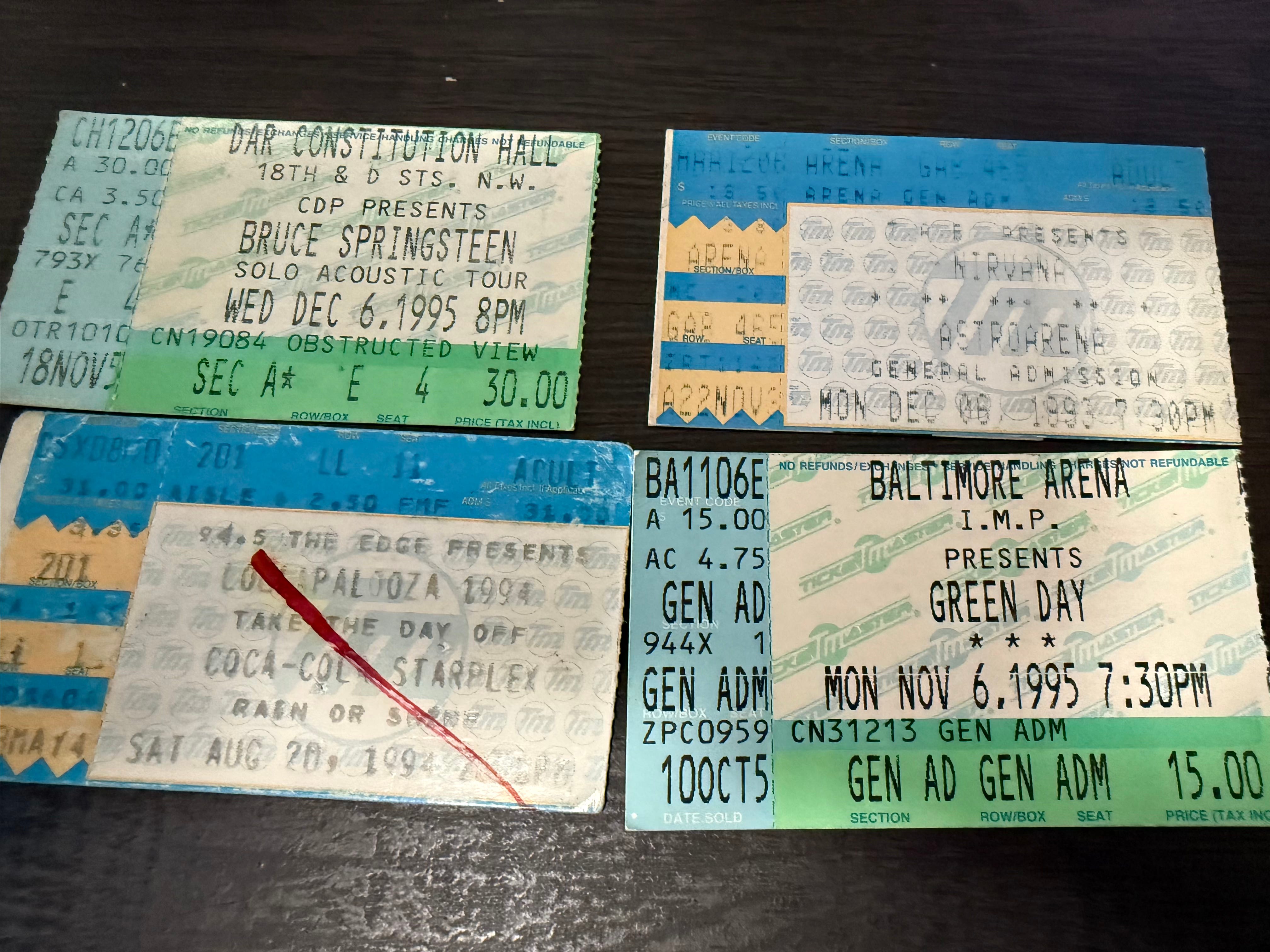
I say all of this as someone who had $10,000 in credit card debt in my 20s, largely as a result of my own poor choices. I just spent and spent and spent on taking my girlfriend to nice dinners, going to see my favorite bands with my friends (like those in the picture at the top of this post), traveling every so often, and more. I do have amazing memories of some of those adventures, but the years I spent paying off all of that credit card debt color them all.
Very little of that spending was done in moderation, and it ended up wrecking my financial life for the better part of my 20s.
I even wrote about my experience telling my then-girlfriend, now-wife about my debt…

I wouldn’t trade the memories I made from the most amazing trips I took or the most thrilling games and shows I attended when I was piling up debt, but I do wish I had been more thoughtful and less YOLO about it.
Not every live show is Nirvana, not every trip is a dream vacation and not every ballgame is a barn-burner. The truth is that I definitely could’ve dialed things back a bit, made it a little easier on myself financially and still had most of my most treasured memories from that time. (Hindsight, amirite?)
Today, my son loves going to see his favorite musical artists. I admire his passion, but it is so much tougher today, given how extravagantly expensive tickets for most any event can be. Those prices make it far harder to afford to attend these shows and far more likely that you’ll take on some debt to do so. It also makes it all the more important to be planful and thoughtful when making these purchases, so that debt can stay in moderation.
He hasn’t taken on any debt yet, but it wouldn’t surprise me at all if he did someday. (He does have the travel bug, too, by the way.) If he does, I hope that he doesn’t dig himself the hole that I did.
How to keep your “good debt” in moderation
Budget for your passions
The best budgets are living documents that reflect our values and priorities, so leaving out things that really matter to you just doesn’t make much sense. If it is a passion of yours and you spend a significant amount of money on it, it should be part of your budget. That makes it easier to manage your spending — and to be flexible when you go off the rails a bit.
Save to help you pay
There’s nothing wrong with having a “Taylor Swift tour fund” or a “Trip to Paris fund” or a “Ballgame road trip fund” that you build alongside your emergency fund. In fact, it is smart. Most of the time, these big events are not spontaneous things. They get dreamt up, planned and coordinated over months, sometimes even years. That means that you probably have sufficient time to build at least some savings that can help manage those costs.
A high-yield savings account can be an incredible tool for these savings goals. Many of these accounts offer annual returns of 4% or more, which can turbocharge your savings.
Be as flexible as possible and don’t be afraid to get a little creative
There’s rarely just one way to accomplish something. The more options you give yourself when planning a big splurge, the more likely you are to keep costs down.
Can you travel during off-peak times?
Are you willing to have a couple of connecting flights instead of flying nonstop?
Would you settle for sitting in nosebleed seats just to get in the building for the concert or the ballgame?
Are you OK with crashing with friends or family rather than paying for a hotel?
Asking yourself questions like these can make the difference between taking a little bit of debt and being overwhelmed with months of debt.
Leverage credit card rewards and 0% offers
Used wisely, the right credit card can help you avoid taking on more debt. It sounds counterintuitive — and it does require discipline to accomplish it — but it is certainly possible.
For example, many cards offer new cardholders 0% interest on new purchases for a limited time. Zero-interest offers on balance transfers tend to be talked about more often, but 0% offers on new purchases are widely available. You’ll likely need a good credit score (like 680 or higher) to get one, but if you can, it can be an amazing tool.
Of course, credit card rewards can be helpful as well. They can lead to free (or nearly free) hotel nights and meals, airfares and more, knocking hundreds or more dollars off the price of a trip. However, they can also save you money on gas, rideshare costs and other such things. If nothing else, a simple cash-back card can give you 1% to 2% or more cash back on what you buy, It may not sound like much, but every little bit helps when you’re trying to avoid debt.
Ask your credit card issuer for a lower APR
Yes, you can do that. It works way, way, way more often than you’d imagine. That fact was the inspiration behind my book, and I wrote about it in depth recently here at “Ask, Save, Earn.”

If you missed it a few weeks ago, check it out. It is well worth the read.
Only borrow what you need
Here’s a little secret… If you have good credit and make a decent amount of money, banks are often willing to throw a lot of money at you. That can be really flattering and exciting, but it can also get you in very real trouble.
Remember that just because a bank is willing to lend you money doesn’t mean that you have to take it or can afford it. That’s true whether you’re talking about a mortgage, a small business loan, a credit card, a personal loan or any other type of financial tool. It is crucial to understand how much money you need to accomplish your goal and limit your borrowing to that amount — and maybe a little extra to give yourself some margin for error.
Am I wrong?
Ultimately, it comes down to this. It is totally fine to take on some debt for the right reasons, as long as it doesn’t happen too often or to too great a degree.
Is it your wisest financial move? Maybe not.
In the long run, would that money you spent on that airfare, concert t-shirt or game ticket serve you better in a savings or investment account? Probably.
Does that mean that you should feel bad when you go a little overboard — and maybe take on a little bit of debt — in pursuit of your passions? Heck no, as long as you don’t go too crazy with it.
I’d love to hear what you think of this. Make your choice in this poll, and then share your thoughts more fully below.
Until next time!
Matt
Great article! I use the budgeting app YNAB and they teach "spendfulness", which is rather than taking the mindset of just "spend less" in order to save and get out of debt, being intentional about spending more in categories that matter to you and saving and using your money in a way that makes sense for your life. I think your point about taking on debt for good reasons really connects with that!!